Most emergencies in the UAE are small and short: a power cut in August, a flooded road after heavy rain, a lost passport or a sudden trip to hospital. Expats feel them more because family is far away and paperwork is tied to a visa. A little preparation now saves a lot of stress later.
- Save 999 (police), 998 (ambulance), 997 (fire) and 991 (electricity failure) in every family phone.
- Keep your Emirates ID and residency in UAE Pass, plus paper copies of passports and visas in a waterproof folder.
- Have two bank accounts or cards and some cash at home.
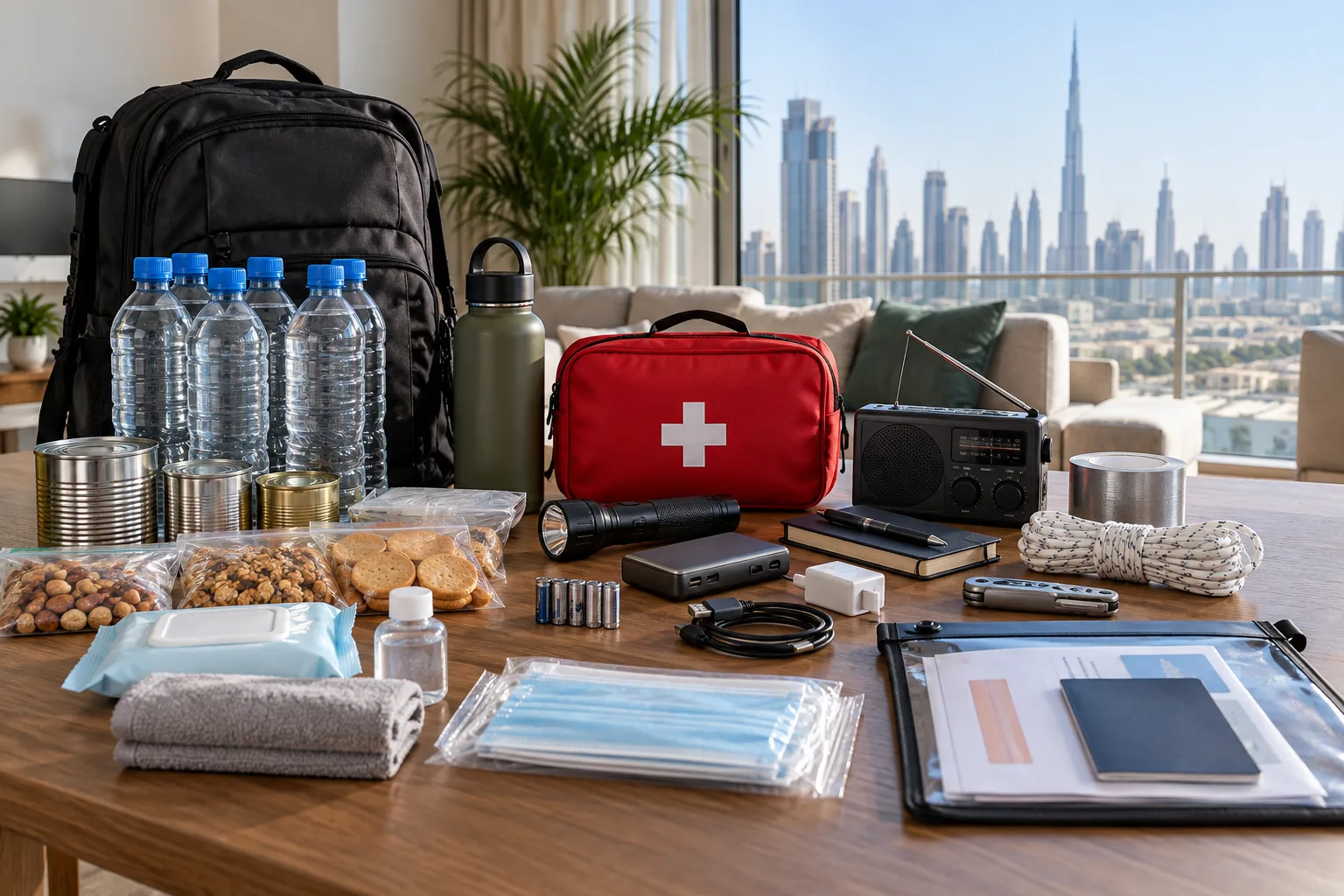
- Pack a 72-hour home kit with water, food, a torch, a power bank, medicines and copies of documents.
- Agree a family contact plan, including one contact outside the UAE.
1. Emergency Numbers
These numbers work from anywhere in the UAE, according to the official UAE government portal.
| Number | Service |
|---|---|
| 999 | Police |
| 998 | Ambulance |
| 997 | Fire Department (Civil Defence) |
| 996 | Coastguard |
| 995 | Search and Rescue |
| 991 | Electricity failure (DEWA in Dubai, SEWA in Sharjah) |
| 901 | Dubai Police non-emergency line |
For power or water failures outside Dubai and Sharjah, Abu Dhabi residents call 800 2332, and residents of the northern emirates call Etihad Water and Electricity on 800 3392.
Useful apps:
- DCAS SOS (Dubai): requests an ambulance and shares your exact location.
- AD999 (Abu Dhabi): reports a fire, calls an ambulance or contacts the police with one button.
- DEWA app: reports and tracks power and water outages in Dubai.
The UAE also runs a National Early Warning System that sends text alerts about dangerous weather. Do not ignore these messages.
Action: Save these numbers in every family member’s phone, including children’s phones and your domestic worker’s phone.
2. Documents
Losing documents is one of the most common expat emergencies. Keep three versions of each important document.
| Document | Digital | Paper copy | Original |
|---|---|---|---|
| Passport (every family member) | Photo in secure cloud storage | Yes | Safe place at home |
| Emirates ID and residency | UAE Pass or UAEICP app | Yes | Wallet |
| Tenancy contract and Ejari | Yes | File at home | |
| Health insurance cards | Insurer app | Yes | Wallet |
| Birth and marriage certificates (attested) | Yes | Safe place | |
| Degree certificates (attested) | Optional | Safe place | |
| Driving licence and car registration | RTA app | Optional | Car or wallet |
UAE Pass can hold a digital Emirates ID and residency details, which most government and many private services accept. The UAEICP app also shows a digital Emirates ID. Read more in our guide to the Emirates ID card.
Action: Put paper copies in a waterproof zip folder inside your home kit. Share digital copies with one trusted family member.
3. Register with Your Embassy
Many embassies and consulates let citizens register their presence online. Registration helps your embassy contact you and helps with lost passports. Find your embassy’s website, note its phone number and email, and check whether it offers registration or an alert service.
Action: Save your embassy’s address and emergency number next to your UAE emergency numbers.
4. Medical and Insurance
- Keep your insurance card (or app) with you. Know your insurer’s 24-hour helpline.
- Know the nearest hospital with an emergency department that accepts your insurance.
- Keep a written list of each family member’s blood group, allergies, chronic conditions and medicines.
- Hold at least a two-week supply of regular medicines. Some medicines need a prescription in the UAE, so refill early.
- If you have a basic plan, check what it covers in an emergency. Our expat health insurance guide explains the main plan types.
5. Money Access
Card machines and ATMs can stop working during a power cut or a bank system outage. Plan for this.
- Hold accounts at two different banks, or at least two cards from different banks.
- Keep some cash in dirhams at home, enough for a few days of food and transport.
- Keep one card separate from your main wallet.
- Make sure your spouse can access money if you are in hospital or travelling. Consider a joint account or a supplementary card.
- Save your banks’ 24-hour helpline numbers to block a lost card quickly.
6. The 72-Hour Home Kit
The UAE’s most likely household emergencies are extreme summer heat, power cuts and heavy rain with local flooding. Your kit should help your family stay safe at home for three days.
| Item | Why |
|---|---|
| Drinking water: about 3 to 4 litres per person per day | Heat raises water needs |
| Ready-to-eat food that needs no cooking | Power may be off |
| Torch and spare batteries | Safer than candles |
| Fully charged power banks | Phones are your link to help |
| First aid kit | Cuts, burns, minor injuries |
| Two-week supply of regular medicines | Pharmacies may be closed or hard to reach |
| Oral rehydration salts | Heat exhaustion |
| Battery or hand-held fan | Heat during a power cut |
| Wet wipes and rubbish bags | Water supply may stop |
| Waterproof folder with document copies | See section 2 |
| Some cash | Card machines may fail |
| Baby supplies (formula, nappies) | If you have young children |
During a summer power cut
- Call 991 (Dubai and Sharjah) or your local provider to report it. Check first whether it is only your flat. If so, call building maintenance.
- Keep curtains closed, stay in the coolest room and drink water regularly.
- Watch elderly people, children and anyone unwell for signs of heat exhaustion: dizziness, headache, heavy sweating or confusion. Call 998 if symptoms are severe.
- Keep the fridge and freezer closed to keep food cold for longer.
During heavy rain and flooding
- Follow official weather alerts and police advice.
- Move valuables, documents and electronics off the floor if water may enter.
- If water reaches electrical sockets, switch off power at the main board only if it is safe to do so.
- Stay away from valleys (wadis), water channels and flooded underpasses.
7. Car Emergency Kit
Breakdowns in summer can become dangerous quickly. Keep these in your car all year:
- Several bottles of drinking water
- Phone charging cable and car charger
- Torch
- First aid kit
- Warning triangle and reflective vest
- Windscreen sunshade
- Basic tools, a tyre inflator or a working spare tyre
- Your insurance policy and roadside assistance number
In heavy rain, Dubai Police advise drivers to slow down, keep a safe distance, avoid flooded roads and not use their phones while driving. After a minor accident where no one is hurt, move your car out of the traffic lanes. See our guide on what expats should know before owning a car in Dubai for more on insurance and roadside cover.
8. Family Contact Plan
- Agree one meeting point near your home and one outside your area.
- Pick one contact outside the UAE, often a relative at home. Everyone reports to this person if local networks are busy.
- Write key numbers on a paper card for each child’s school bag. Do not rely only on phones.
- Make sure your children’s school has your current contact details and an alternative contact.
- Agree who collects the children if you cannot.
9. Pets
- Make sure your pet is microchipped and the details are up to date.
- Keep vaccination records (digital and paper).
- Pack three days of pet food, water and any medicines in your home kit.
- Keep a carrier ready and know the number of a 24-hour vet.
- In a power cut, keep pets in the coolest room. Heat stroke is a real risk for dogs and cats in summer.
Our guide to moving to Dubai with pets covers microchipping and vaccination rules.
Review Your Plan Twice a Year
Check your kit and documents twice a year: once before summer (May) and once before the rainy months (November). Replace expired food, water and medicines. Update copies when passports or visas are renewed.
FAQ
What is the emergency number in the UAE?
Call 999 for police, 998 for an ambulance and 997 for the fire department. These numbers work in all seven emirates; the UAE Government emergency guide also lists 996 for the coastguard, 995 for search and rescue, and 991 for electricity failure.
Who do I call during a power cut in Dubai?
Call DEWA on 991, or report it in the DEWA app. If the fault is only in your flat or building, contact your building maintenance team.
Is a digital Emirates ID accepted in the UAE?
Yes. The digital Emirates ID in UAE Pass or the UAEICP app is accepted for most government and many private services. Still keep the physical card and a paper copy.
How much water should I store at home?
Store about 3 to 4 litres per person per day for at least three days. Heat increases water needs, so store more for summer.
Should I keep cash at home in the UAE?
Yes, a small amount. Card machines and ATMs can stop working during a power cut or system outage.