Leaving Dubai is rarely simple — not because the rules are cruel, but because there are many moving parts to close out at once. Whether you are relocating for a new job, heading home, or just ready for a change, this guide walks you through every step in the right order. Follow it and you will leave cleanly, with your money, your deposit, and your paperwork all settled.
Notice Period and Final Salary
Under UAE Labour Law (Federal Decree-Law No. 33 of 2021), the standard notice period is 30 calendar days. Your employment contract may specify a longer period — 60 or 90 days is common for senior roles — but it cannot be shorter than 30 days. Submit your resignation in writing, keep a copy, and note the date your employer acknowledges it.
Your employer is required to pay your full final salary — including any accrued but untaken annual leave — on your last working day or no later than 14 days after your visa is cancelled, whichever comes first. This is a firm legal obligation under MOHRE (Ministry of Human Resources and Emiratisation) rules. If payment is delayed beyond that, you have the right to file a complaint through the MOHRE app or website.
Do not leave without confirming your leave balance in writing with HR beforehand. Disputes over leave entitlement are common and are much harder to resolve once you have left the country.
End-of-Service Gratuity (What You Are Owed)
End-of-service gratuity is one of the most significant financial entitlements for departing expats, and one of the most misunderstood. Here is how it is calculated under UAE law:
- Years 1–5: 21 days of basic salary per completed year of service
- Year 6 and beyond: 30 days of basic salary per completed year of service
- Cap: Total gratuity cannot exceed two years of total salary
The calculation is based on your basic salary only — not allowances such as housing or transport. Example: if your basic salary is AED 15,000 and you have worked for 3 years, your gratuity is (15,000 / 30) × 21 × 3 = AED 31,500. Partial years are prorated.
One important rule: gratuity is not paid if you resign before completing one full year of continuous service. If you are approaching your one-year mark, factor this into your notice timing.
Gratuity may be reduced if you resign voluntarily after one year but before five years. In practice, many employers pay the full amount anyway, but the law permits them to pay a proportion for resignations in years one through five. Ask your HR team for a written gratuity calculation before your final day.
Visa Cancellation Process

Your employer initiates visa cancellation through the MOHRE and ICP (Federal Authority for Identity, Citizenship, Customs and Ports Security) systems. You do not apply for this yourself — your HR or PRO department handles it.
Once your employment ends, the process typically takes 2–5 working days. You will receive either a cancellation stamp in your passport or an exit permit confirming the visa is cancelled. After cancellation, you have a 30-day grace period to either leave the UAE or change your status (for example, by securing a new employer or applying for a freelance permit). You can travel freely during this period — there is no restriction on movement.
If you leave the UAE and re-enter during the grace period, the grace period is not extended. Plan your final departure accordingly.
Emirates ID
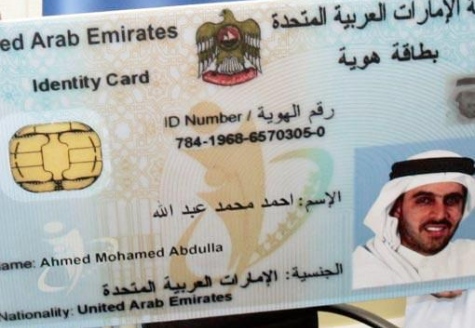
Your Emirates ID becomes invalid automatically when your visa is cancelled. Technically, ICP requires you to return the card, but in practice most expats leaving the country simply hold on to it as a keepsake. It will not function for any official purpose once deactivated.
If you want to formally surrender it, you can do so at any ICP service centre or through the ICP app before you depart.
Closing Your Bank Account
Give yourself at least two to four weeks to close your bank account properly. Rushing this is one of the most common mistakes departing expats make.
Before you can close an account, you must clear any outstanding credit card balances, personal loans, or overdrafts. Banks will not process a closure request while there is a debit balance. If you have a mortgage on a UAE property, that is a separate and more complex matter requiring legal advice.
Once balances are cleared, transfer your funds out. International transfers via your bank’s SWIFT system are reliable, and most UAE banks allow transfers of AED 100,000–200,000 per day online. Wise (formerly TransferWise) is a cost-effective alternative for converting and sending money abroad with lower fees than most banks.
Submit a written account closure request — most banks now accept this via their app or internet banking, though some require a branch visit. Ask for a written confirmation of closure and keep it. This is useful if any erroneous charges appear on the account after you have left.
If you are new to UAE banking or want context on how accounts work here, our guide on how to open a bank account in Dubai as an expat covers the structure that you are now unwinding.
Your Tenancy Deposit
Under RERA (Real Estate Regulatory Authority) rules, your landlord must return your security deposit within 30 days of your move-out date. Deductions are only permitted for documented damage beyond normal wear and tear — meaning minor scuffs, faded paint, and general aging of the property do not count.
To protect yourself, conduct a formal handover inspection with the landlord or their agent. Sign a handover form, take photographs of every room, and get the landlord’s signature confirming the condition. Email a copy to both parties.
If your deposit is not returned within 30 days or is disputed, file a complaint with the RERA Rental Dispute Centre (RDC). The process is online and costs a nominal fee. Many landlords settle quickly once a filing is made.
Also note that the municipality housing fee — charged at 5% of annual rent and collected via DEWA — stops accruing once you de-register your tenancy. If you are leaving mid-year, ensure DEWA is notified promptly so you are not billed beyond your actual occupancy.
DEWA and Utilities Disconnection
Apply for DEWA disconnection via the DEWA app, the website, or by calling their call centre. Provide your move-out date and they will generate a final bill. The standard security deposit is AED 2,110 for apartments and AED 4,000 for villas. Your final bill is deducted from this deposit and the balance is refunded to your registered bank account within 21 days.
Make sure the bank account registered with DEWA is one you will still have access to after leaving. If you are closing your UAE account before DEWA processes the refund, update your refund details in the DEWA app first.
District cooling (if applicable) and Etisalat/du internet contracts should be cancelled separately. Internet providers typically require 30 days’ notice and may charge an early termination fee if you are within a contract period.
Salik and NOL Card

Salik (road tolls): Log into your RTA Salik account at salik.rta.ae, navigate to account closure, and request a refund of your remaining balance. The process takes two to four weeks and the refund is returned to your registered card or bank account. There is no physical tag to return — the tag registered to your vehicle simply becomes inactive.
NOL card: If you have been using public transport, you can refund your NOL card at any RTA customer service centre. You receive back the AED 25 card deposit plus any remaining credit balance. For more on how the NOL card works across Dubai and Sharjah routes, see our guide on NOL card connectivity for Dubai-Sharjah buses.
Shipping Your Belongings

For most expats, the choice is between sea freight and air freight. Sea freight is significantly cheaper — roughly a quarter of the cost of air freight — but takes four to eight weeks to arrive, depending on the destination. Air freight takes five to seven days but is only practical for smaller shipments or urgent items.
Request quotes from at least three companies. Reputable international movers operating in Dubai include Crown Relocations, AGS Movers, and Al-Futtaim Logistics. Compare based on total door-to-door cost, insurance coverage, and destination customs handling. Ask specifically whether the quote includes origin pick-up, packing, destination delivery, and customs clearance — or whether these are itemised separately.
Check destination customs rules for any restricted items. Some countries have strict rules around food products, plants, certain electronics, and personal medications.
Exit Checklist
| Task | Timeline | Notes |
|---|---|---|
| Submit written resignation | Day 0 | Keep a copy, note acknowledgement date |
| Confirm leave balance with HR | Day 0–7 | Get it in writing |
| Request gratuity calculation from HR | Week 1 | Verify against your contract |
| Initiate DEWA disconnection | 2–4 weeks before move-out | Update bank details for refund |
| Give notice to landlord | Per tenancy agreement | Usually 60–90 days for annual leases |
| Book removal/shipping company | 4–6 weeks before departure | Get 3 quotes |
| Clear credit cards and loans | 2–4 weeks before departure | Required before bank account closure |
| Request bank account closure | 2 weeks before departure | Get written confirmation |
| Cancel Salik account and request refund | 2–4 weeks before departure | Via RTA website |
| Refund NOL card | Before departure | At any RTA service centre |
| Tenancy handover inspection | Move-out day | Sign handover form, photograph everything |
| Employer initiates visa cancellation | Final working day or shortly after | Takes 2–5 working days |
| Withdraw child from school | Per school notice policy | Usually 1 month’s notice required |
| De-register or export vehicle | Before departure | Visit RTA for export certificate or transfer ownership |
Frequently Asked Questions
What is the grace period after visa cancellation, and what can I do during it? After your employer cancels your visa, you receive a 30-day grace period during which you can remain in the UAE legally. You can use this time to settle final affairs, find a new job, or change your visa status. If you re-enter the UAE after leaving during the grace period, you do not get an additional 30 days — the clock continues from the original cancellation date.
Can I receive end-of-service gratuity if I resign? Yes, if you have completed at least one full year of continuous service. Gratuity is not paid for service of less than one year. For resignations between one and five years of service, some employers apply the full calculation while others apply a proportional amount as permitted by law. After five years of service, you are entitled to the full calculation regardless of whether you resigned or were terminated.
How do I prove my last working day if there is a dispute? Your employment contract, written resignation letter (with employer acknowledgement), final payslip, and visa cancellation date are all documentary evidence of your service period. Keep copies of all of these securely — ideally both physically and in cloud storage — before you leave the country.
Is there an exit tax or tax clearance required when leaving Dubai? No. The UAE does not levy personal income tax, and there is no formal exit tax or tax clearance certificate required for individual employees leaving the country. If you are a business owner or have VAT obligations, consult a UAE-registered accountant to ensure your corporate filings are up to date before winding down.